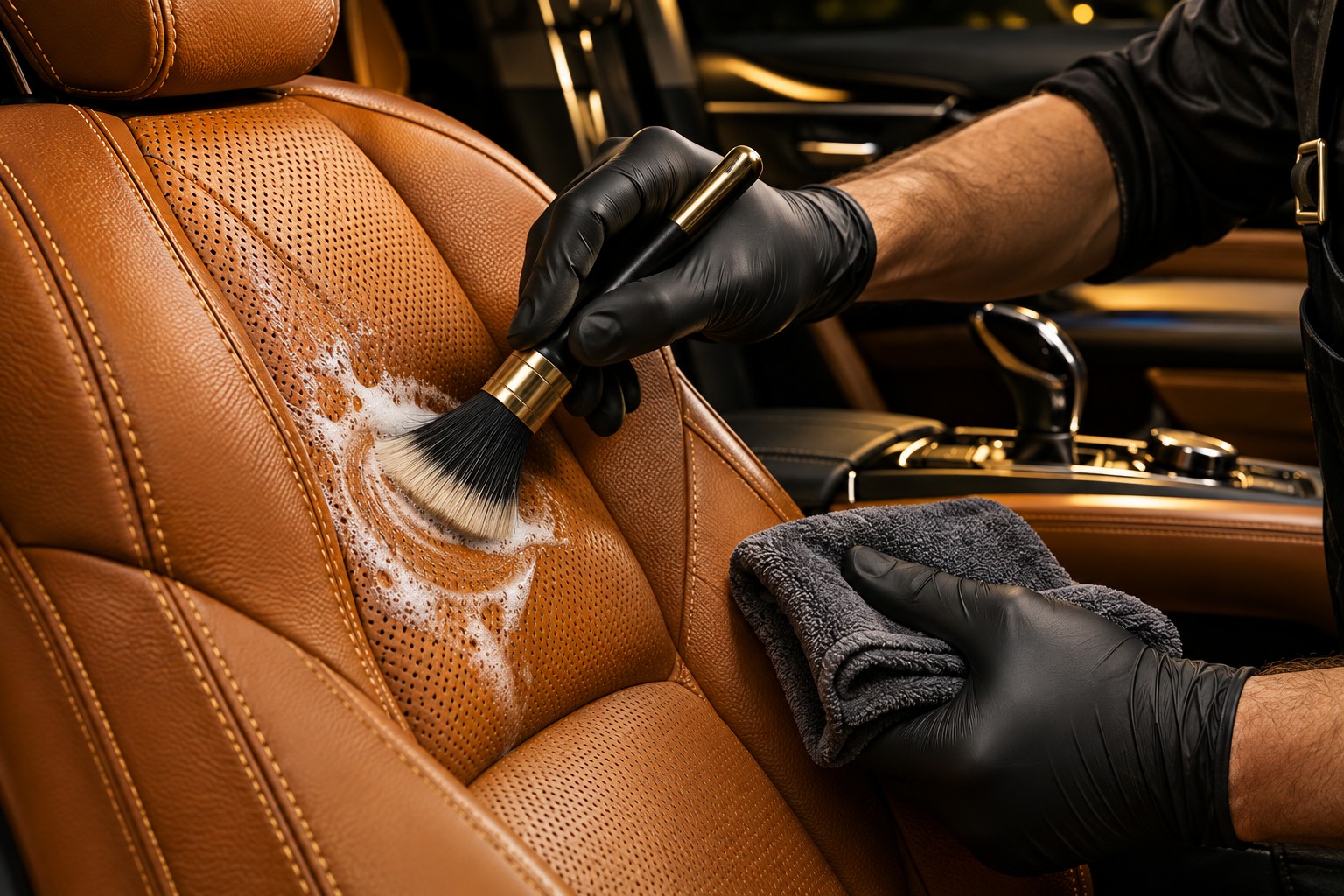
Step-by-step method
- Identify the upholsteryCheck the vehicle guidance and material type. Products designed for coated leather may be unsuitable for aniline leather, suede-like materials or some synthetics.
- Remove dust gentlyVacuum folds and seams using a soft, non-abrasive attachment.
- Patch-test the cleanerUse a product compatible with the surface and test in a hidden area for dye transfer, staining and colour change.
- Clean small areasApply to a suitable cloth or brush if instructed. Work gently and avoid saturating perforations or integrated controls.
- Dry and protect if appropriateWipe with a clean microfiber cloth. For a compatible coated-leather protectant, observe the product-specific application and curing directions.
Mistakes to avoid
- Strong household chemicals and solvents without manufacturer approval.
- Stiff brushes, hard scrubbing and excess liquid.
- Conditioner or coatings on incompatible materials.
Key takeaway
Identify and test the material first; routine “conditioning” is not automatically right for every leather seat.
Technical references
VORA educational guide based on published instructions and recommendations from the manufacturers listed. The instructions for your vehicle and exact product take precedence. No result or universal safety guarantee is possible across all materials.